
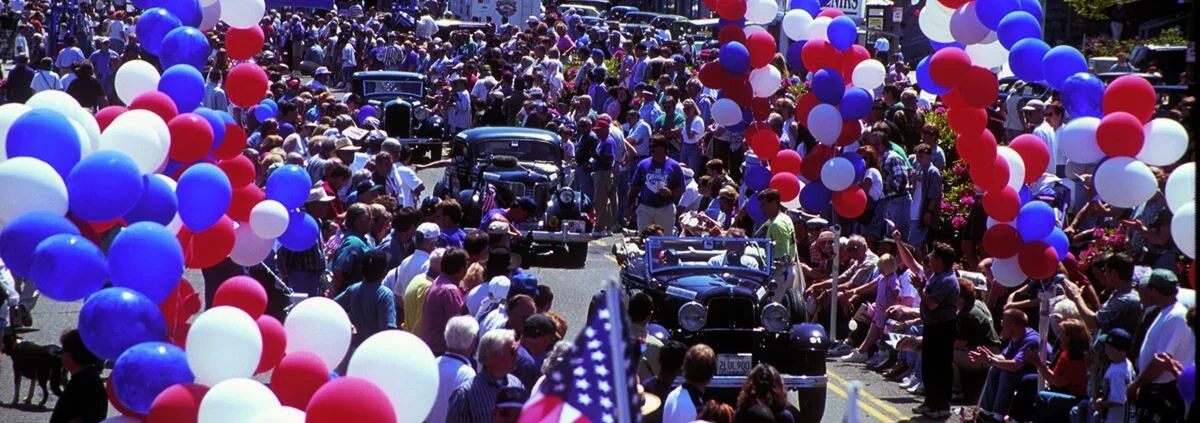
Great Race History
More than four decades of vintage cars, unforgettable roads, incredible people, and one very Great American adventure.
An Idea That Became an American Tradition
Great events don’t happen by accident, and they certainly don’t happen in the blink of an eye. It takes a tremendous amount of work to develop, organize, and run an event as intricate as the Great Race. That was especially true in 1983, when Tom McRae and Norman “Bubba” Miller helped turn an ambitious idea into a coast-to-coast adventure unlike anything the old car hobby had seen before.
The two became partners after buying out an ailing race promoter who planned to race pre-World War II automobiles across the United States for a massive purse. Plenty of people doubted whether an event of that magnitude could actually work. With the help of a crew of equally determined car enthusiasts, McRae and Miller proved that it could.
From that inaugural event in 1983 came decades of memorable routes, remarkable automobiles, close competition, family traditions, and lifelong friendships.
The Road Through History
From an unexpected phone call to an enduring American motorsports tradition, the Great Race has never taken the ordinary route.
The Phone Call
In late summer, Tom McRae received a call from friend and fellow car enthusiast Curtis Graf about an ambitious new event: a pre-World War II automobile race from Los Angeles to Indianapolis with $250,000 in prize money.
The First Great Race
After the original event struggled to attract entrants, McRae brought Norman “Bubba” Miller into the project. Together they moved forward with the race.
Sixty-nine antique automobile teams arrived at Knott’s Berry Farm near Los Angeles to begin the inaugural journey to Indianapolis.
Back for More
Following the success of the inaugural event, the Great Race returned for another California-to-Indiana journey and began establishing itself as an annual tradition.
Disneyland to Disney World
One of the most memorable early routes stretched from Disneyland in Anaheim, California, all the way to Disney World in Orlando, Florida — a fitting adventure for an event that was quickly becoming a family tradition.
East to West
The Great Race reversed its more traditional direction, traveling from Norfolk, Virginia, to Seattle, Washington and proving that there was always another road worth exploring.
Across International Borders
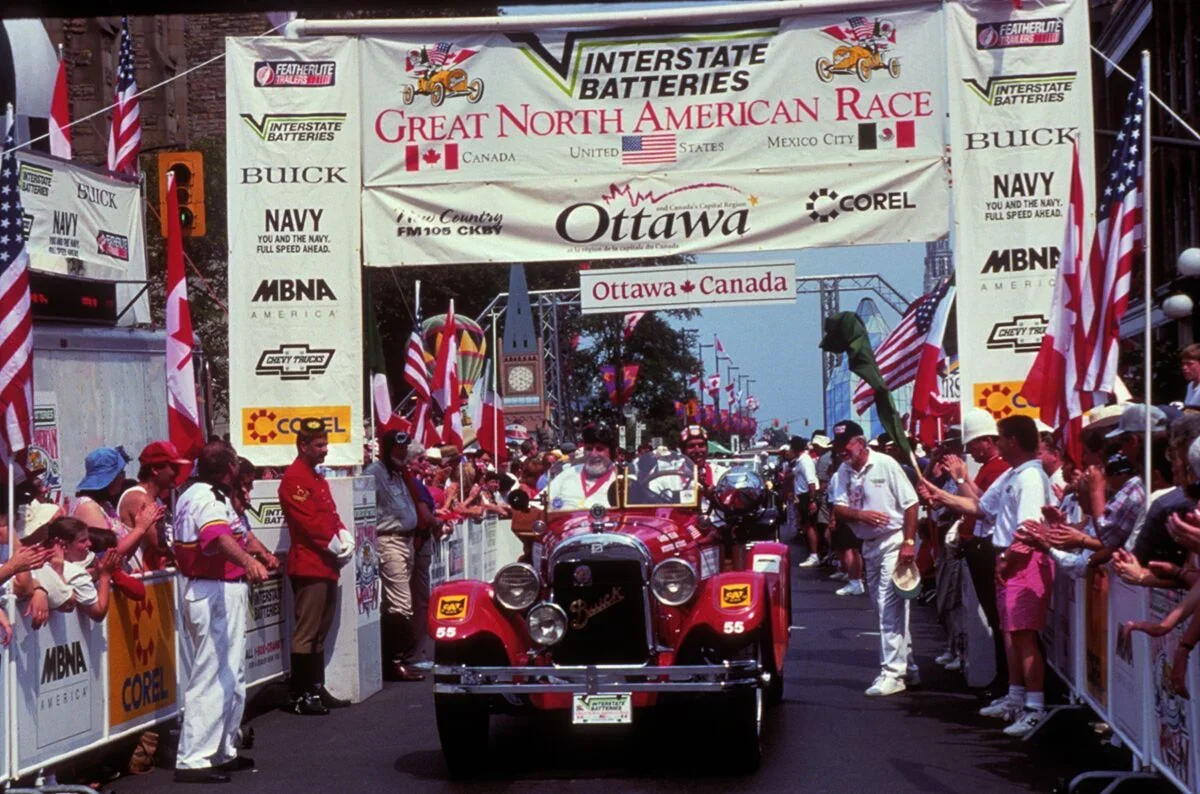
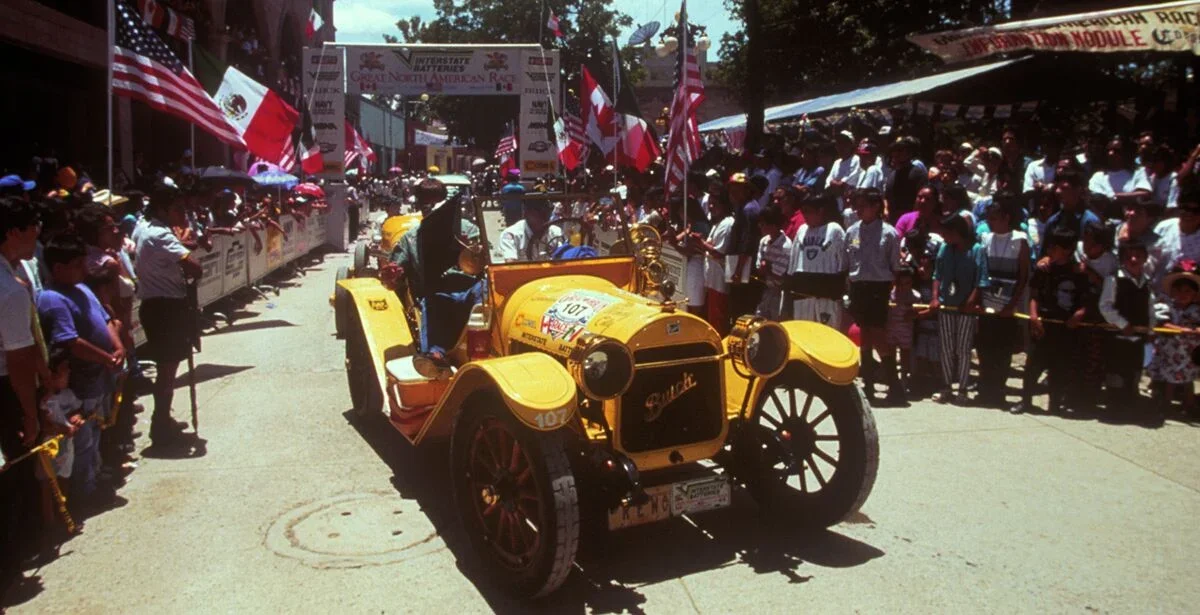
One of the event’s most ambitious routes traveled from Ottawa, Canada, to Mexico City, Mexico — taking the Great Race from north to south across three countries.
The Tradition Continues
More than four decades after the first starting flag, vintage automobiles, families, friends, competitors, volunteers, and communities across America continue to bring the Great Race to life each year.
One Phone Call Changed Everything
Looking back to the early 1980s, Tom McRae was an ordinary car guy, regularly working on his own projects. But in late summer of 1982, his outlook on the old car hobby changed dramatically after a phone call from good friend and fellow enthusiast Curtis Graf.
“It’s something called the Great American Race from L.A. to Indy for $250,000 in prize money!”
The most alluring part was that the event was open only to pre-World War II vehicles. McRae and Graf signed up for the long-distance journey — only to discover they were the event’s only entrants.
McRae contacted his old friend Norman “Bubba” Miller and brought him into a partnership to buy out the original promoter. What followed was a long battle to organize, promote, and ultimately prove that such an ambitious event was possible.
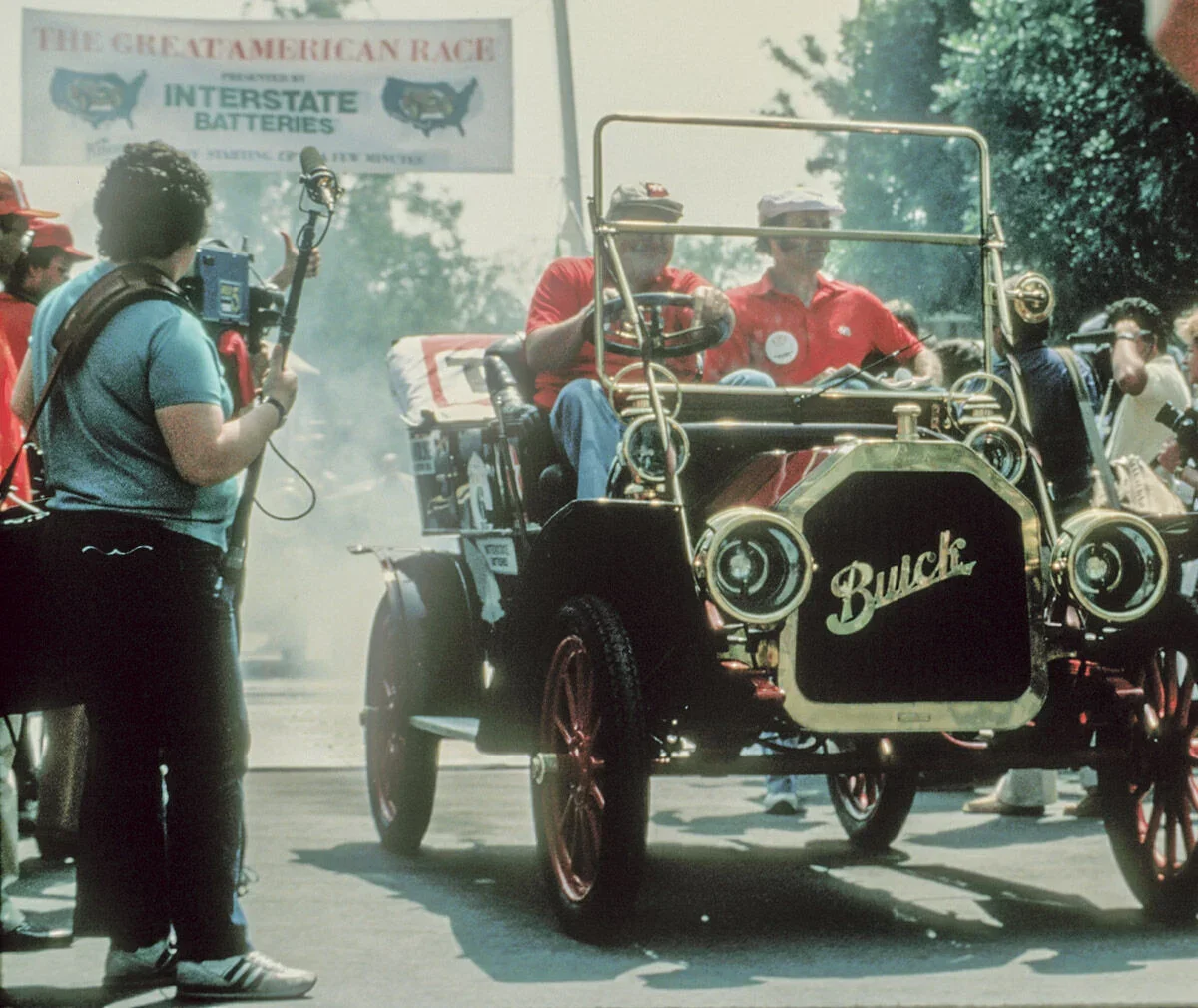
Los Angeles to Indianapolis
The result was 69 brave antique automobile teams arriving at Knott’s Berry Farm near Los Angeles for the start of the inaugural Great Race.
Their destination was Indianapolis during the heart of “500 Week.” Bringing a fleet of vintage automobiles into a city packed with race fans was no small challenge.
McRae received help from Indianapolis’ 32-officer National Champion Motorcycle Drill Team, which shut down rush-hour traffic to escort the 62 finishing racers into the Indianapolis Motor Speedway for a well-earned victory lap before continuing into downtown Indianapolis and the host hotel.
The following day, 16 racers participated in the Indy Festival Parade. The inaugural Great Race winner even received a special ride around the famous Brickyard in the passenger seat of the Indianapolis 500 Pace Car shortly before the start of the race.
after completing the first Great Race in 1983.
America Became the Course
With a successful first event behind them, McRae and the Great Race crew prepared for another California-to-Indiana run in 1984. As the years went by, McRae continued finding new ways to make each route an adventure.
He also worked to make the event family-oriented so competitors could share the experience with children, grandchildren, spouses, and friends.
Routes generally traveled west to east, but the Great Race has never been afraid to change direction. In 1991, competitors traveled east to west from Norfolk, Virginia, to Seattle, Washington. Four years later, the 1995 route went north to south from Ottawa, Canada, to Mexico City, Mexico.
Because vintage automobiles are not built for endless interstate miles, Great Race routes have traditionally favored the back roads. Those roads became part of the experience — taking racers through small towns, scenic landscapes, historic communities, and places they might otherwise never have seen.
What Makes the Great Race Different
The Cars
Vintage automobiles are challenged over hundreds of miles of carefully selected roads, keeping automotive history alive by putting these machines where they belong — on the road.
The People
Drivers and navigators come from different backgrounds and generations, but a shared love of old cars quickly turns fellow competitors into friends.
The Places
The Great Race introduces competitors to remarkable back roads, downtowns, landscapes, and communities across America.
The Tradition
For many families, the Great Race is something planned for all year long — and passed from one generation to the next.
The Competition Ends. The Friendships Don’t.
No matter the route, Great Race participants have experienced some of the most incredible scenery this country has to offer. Many racers have beaten the odds and walked away with a victory, but every team shares something larger — the experience of crossing the country beside a close friend or family member.
Family teams have always been an important part of the event, from husbands and wives to parents, children, grandparents, and grandchildren. And after spending days together on the road, competitors almost inevitably leave with a few new friends too.
The camaraderie among Great Race participants remains one of the event’s defining characteristics. Background, hometown, age, and choice of race vehicle matter a lot less once everyone is out on the course.
In the communities along the route, these ordinary car enthusiasts become celebrities for the day — signing autographs, sharing stories, and answering questions from spectators eager to see the vintage machines up close.
More Great Race History
Follow the roads, revisit the communities, and watch moments from Great Race history come back to life.
Routes Through the Years
Look back at the routes that have carried the Great Race across America and beyond through more than four decades of competition.
Cities Through the Years
Explore the towns and cities that have welcomed Great Race teams, spectators, and vintage automobiles over the years.
Archived Footage
Revisit Great Race moments from years past through historic video, interviews, broadcasts, and footage preserved from the archives.
A Vision That Still Travels With Us
Competing in the Great Race requires commitment. It is not simply a weekend event, and many participants build their schedules around it months — or even years — in advance. That dedication has helped make the Great Race what it is today.
Tom McRae founded the race around values that were important to him: family, country, faith, and a shared love for old automobiles. He believed strongly in saying a public prayer in every community to bless the participants and everyone involved in the event, making faith an important part of the tradition he created.
Although McRae is no longer with us, his vision lives on every time another vintage automobile leaves the starting line, another family begins the journey together, and another American community welcomes the Great Race to town.